
Marijn Booman/go-to-market operator/AI systems
From a business on a map to a reply in the inbox.
I design and run the systems that do go-to-market — discovery, qualification, outreach, follow-up — and keep a person on the calls that matter. Two worked examples below, and the stack I run on myself.
Operating rules
Six rules the systems are built on
Not slogans. Each one is a decision that shows up in the wiring — usually in what runs before what.
Case study
A lead pipeline, map to inbox
gig.solja.one — local services marketplaceSituation
The marketplace needed a steady flow of the right local businesses to talk to. Buying a contact list doesn't fix that: the lists go stale, most of the names are a poor match, and everyone else in the market is emailing them anyway. Sales was spending most of the week looking for people to talk to instead of talking to them.
What I did
Designed a pipeline that does the finding and the groundwork and hands a person a short, qualified list with an email already drafted. Built with an engineering partner — the GTM design is the part I own: who we target, how a lead earns its way to outreach, how the mail actually goes out.
Figure 1 — the pipeline
What broke, and the fix
Each one needed its own fix. That's the half of the work a diagram never shows.
Case study
Selling location intelligence
marketlyzer.ai — location analyticsSituation
Marketlyzer has genuinely good data: score any address before you sign the lease, track every branch of a chain, map a territory with contacts and new-entrant alerts. What it didn't have was a way to sell it. The US market is saturated — Placer.ai owns the category and enterprises already run a dozen analytics tools. Europe has no equivalent and a real appetite for the data. That gap was the opening.
What I did
- One vertical, not ten. Started with gyms, because the strongest proof was there: the model predicted membership for a Swedish chain's new sites to about 80% accuracy — 1,829 predicted against 1,800 actual — before a single one opened.
- Sold the wedge, not the dashboard. Enterprises don't want another dashboard; they want a number. The pitch became: give us fifty streets, we'll tell you the revenue per branch, and which fifty to skip.
- Two buyers, two decks. Lease managers get traffic and turnover by category. Mall directors get solution and payback. Land one or two brands as a reference, then expand store by store — not through top-down procurement, which runs one to two years.
- Wired the CRM to the product. The CRM sits on the Marketlyzer backend, so the same record drives the map, the outreach and the follow-up. Outreach runs from a company address, automation-first and A/B tested; demos are where a person takes over and closes.
- Priced it so the mall makes money. A package for the mall, brands pay separately to join the brand-mix tool, the mall takes a cut. The tool becomes a revenue line, not a cost.
Figure 2 — the motion
What happened
Early days, and the numbers are soft: a case study landed with Inditex, and outreach was replying at roughly 15–20%. The target the motion is built to hit is one closed enterprise deal within thirty days of the funnel going live.
My own stack
I don't pitch systems I don't run
A few of the ones pointed at my own week:
Figure 3 — the chief-of-staff loop
- Chief-of-staff loop. Every meeting is transcribed, filed, and read by an agent that writes a daily brief: who I owe a reply, what I said I'd send, which meetings should move, which emails I forgot. Figure 3.
- Three outreach streams, always on. An agent runs three parallel searches — target roles, recruiters, client leads — and nudges me on anything that's gone quiet, with a weekly follow-up sweep.
- Pipeline in the terminal. Mail pipes into a sheet the agent can read; it flags unresponsive threads and surfaces the next action each morning.
- Origami: trialled, cut. Automated founder outreach. Fast, but too cold without better filtering, so I switched it off. Worth saying — knowing what to stop running is part of the job.
The pattern
Every one of these is the same shape
- Intelligence — who exists, and who is actually a fit
- Targeting — a human checkpoint, with the model's reasoning attached
- Outreach — one-to-one mail at machine scale, from a real mailbox
- Pipeline — one record, deduped, linked back to the source
- Follow-up loop — reply in, sorted by sentiment, next touch scheduled
- Measurement — honest signals, used to prioritise, not to report
The machine does the finding. A person still decides. That's the whole design.
About
The human behind the systems
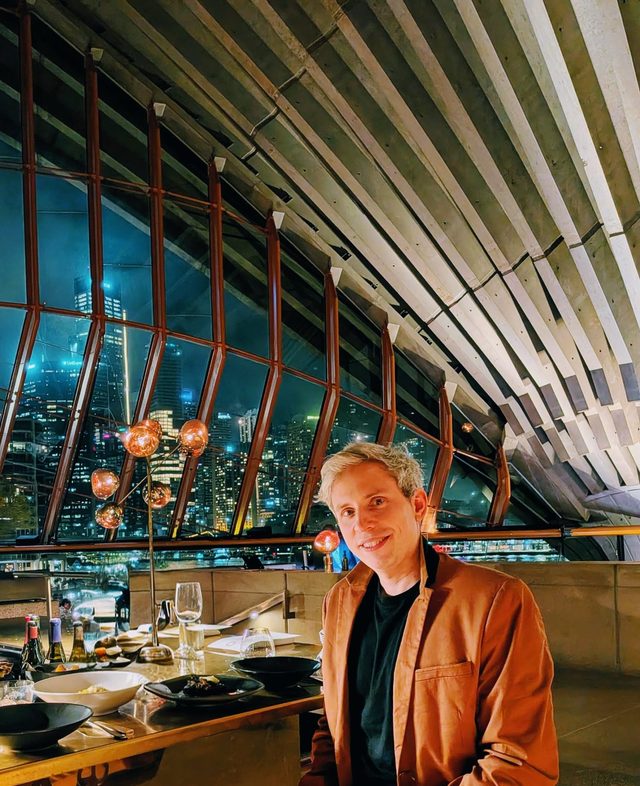
I've spent the last 15+ years building, launching and scaling businesses across Europe and Asia — usually in situations where there wasn't an existing playbook.
I'm Dutch, grew up in Switzerland, and have lived and worked across Beijing, Shanghai, Singapore, Kuala Lumpur, Tokyo and Barcelona.
That journey shaped how I work today: understand a market quickly, find the opportunity, connect the right people, build a system around the problem, test it in the real world and keep iterating.
Long before AI agents, much of my career was already about building systems — for market expansion, partnerships, growth, operations and commercial execution.
A few chapters along the way
- 25+ markets launched and scaled. Worked across Asia, Europe, the Middle East and other emerging markets, helping businesses go from initial market entry to repeatable commercial operations.
- HotelQuickly — 0 → $150M GMV. Co-founded HotelQuickly, one of Asia-Pacific's early mobile-only hotel booking platforms. We grew from an idea into a business operating across 18 countries, raised approximately $15M and ultimately exited. Read about HotelQuickly on TechCrunch →
- iFlix — 3 → 24 markets. Helped expand iFlix across Asia, the Middle East and emerging markets as the streaming business grew from approximately 1.2M to 25M users, using partnerships with telcos and local market operators as a major distribution engine. Read about iFlix in Variety →
- FreakOut — building ahead of an IPO. Led regional expansion for Japanese adtech company FreakOut, opening operations across markets including Thailand, Turkey, Indonesia, Taiwan, Malaysia and Singapore. FreakOut went on to become one of Japan's notable adtech IPO stories. Read about FreakOut's IPO →
- Ferryhopper — first profitability in 7 years. As Commercial Director, helped Ferryhopper reach its first profitable year, while growing revenue by roughly 40% YoY, increasing B2B GMV by almost 200%, and developing major strategic distribution partnerships including Omio.
- Open English — €3M new net revenue + 2 M&A projects. Led expansion initiatives across Spain, Portugal, Turkey and India, generating approximately €3M in new net revenue while also supporting two M&A projects: English Ninjas in Turkey and Enguru in India.
- $3.6M crowdfunded across 9 campaigns. Built and ran nine Kickstarter and Indiegogo campaigns with a 100% funding success rate, helping founders turn early concepts into commercially validated products.A few examples:
2 exits. 1 IPO. Multiple zero-to-one journeys.
Across travel, streaming, education, adtech, fintech and marketplaces, the common thread has rarely been the industry. It has been figuring out how to make something work where the answer isn't obvious yet.
Today, I'm applying that same mindset to AI. Instead of only building teams, processes and commercial operations, I can now build agents, automations, workflows, data layers and interconnected systems that research, analyse, create and execute alongside me.
The tools have changed. The way I think about building hasn't.
AI isn't replacing my experience. It's allowing me to turn that experience into systems that can operate at scale.